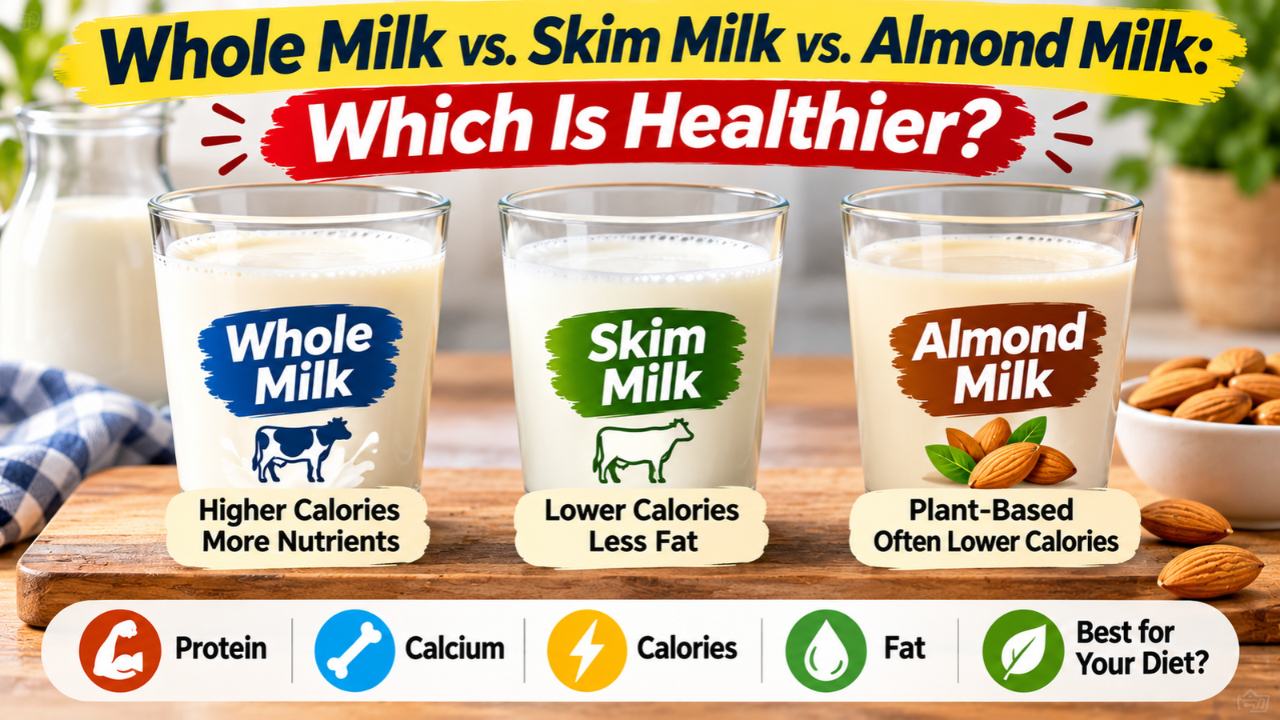
Milk is a common part of many Indian homes, but choosing between whole milk, skim milk, and almond milk can be confusing. Each option has a different taste, calorie level, fat content, and nutrition profile. The right choice depends on your age, health goal, allergies, and daily diet.
Whole milk is creamy and high in fat, while skim milk has almost no fat but keeps the protein and calcium. Almond milk is a plant-based, dairy-free drink that is low in calories but usually very low in protein. For most adults, skim milk is often the best balanced choice, but almond milk can be better for people who cannot digest lactose or prefer plant-based options.
What Is Whole Milk?
Whole milk is cow’s milk that contains about 3.25% milk fat. It is thick, creamy, and provides more calories than low-fat or skim milk. One cup of whole milk gives about 150 calories and 8 grams of protein.
It also contains about 8 grams of total fat, including roughly 4.5 grams of saturated fat. Whole milk is not “bad,” but drinking it regularly can increase your daily calorie and saturated-fat intake.
What Is Skim Milk?
Skim milk, also called fat-free milk or nonfat milk, is cow’s milk with almost all fat removed. It has a thinner texture than whole milk but still provides about 8 grams of protein per cup.

One cup of skim milk has about 83 calories and only around 0.1 gram of saturated fat. It is a good option for people who want high protein, calcium, and vitamin D without extra fat.
What Is Almond Milk?
Almond milk is a plant-based drink made by blending almonds with water and straining the mixture. It is naturally lactose-free and is often chosen by people with lactose intolerance or those following a vegan diet.
Unsweetened almond milk has about 30 calories per cup and no saturated fat. However, it contains only about 1 gram of protein, so it is not a full nutritional replacement for dairy milk unless your diet includes other protein sources.
Nutrition Comparison Table
The values below are for one cup (240 ml). Fortified almond milk values can change by brand, so always read the label.
| Nutrient | Whole Milk | Skim Milk | Unsweetened Almond Milk |
| Calories | 150 | 83 | 30 |
| Protein | 8 g | 8 g | 1 g |
| Total fat | 8 g | 0 g | 2.5 g |
| Saturated fat | 4.5 g | 0.1 g | 0 g |
| Carbohydrates | 12 g | 12 g | 1 g |
| Natural sugar | 12 g | 12 g | 0 g |
| Calcium | 276 mg | 298 mg | 450 mg when fortified |
| Vitamin D | 3 mcg | 3 mcg | 2.5 mcg when fortified |
| Potassium | 322 mg | 381 mg | 170 mg |
Which Milk Has More Protein?
Dairy milk wins clearly for protein. Both whole milk and skim milk provide about 8 grams of complete protein per cup, while unsweetened almond milk provides only about 1 gram.

Protein is important for muscles, recovery, immunity, and feeling full after meals. If you drink milk mainly for protein, skim milk gives the same protein as whole milk but with fewer calories.
Which Milk Is Better for Weight Loss?
For weight management, unsweetened almond milk has the fewest calories, followed by skim milk. Whole milk has the highest calories because of its fat content.
However, calories are not the only factor. Skim milk may keep you fuller for longer because it has more protein. Almond milk is lighter, but if it does not keep you satisfied, you may end up eating more food later.
Which Milk Is Better for Heart Health?
Skim milk is usually better for heart health because it has almost no saturated fat. Whole milk contains more saturated fat, and high intake of saturated fat can raise the risk of heart disease for some people.
Unsweetened almond milk has no saturated fat and contains mostly unsaturated fats. But because it has very little protein, it should be combined with other healthy protein foods.
Which Milk Is Best for Bones?
All three options can support bone health, but in different ways. Cow’s milk naturally contains calcium, protein, potassium, and vitamin D, which help maintain strong bones and teeth.
Almond milk can also support bone health if it is fortified with calcium and vitamin D. Always check the label, because unfortified almond milk may not provide enough calcium.
Which Milk Should You Choose?
Important Tips Before Buying Milk
- Choose unsweetened almond milk to avoid added sugar.
- Check whether almond milk is fortified with calcium and vitamin D.
- If you want protein, choose skim milk or add protein-rich foods to your diet.
- If you have diabetes or are watching weight, skim milk or unsweetened plant milk is usually a better choice than whole milk.
- Avoid flavoured and sweetened milk drinks if you are trying to reduce sugar intake.
FAQs
1. Is skim milk healthier than whole milk?
For most adults, yes. Skim milk has the same protein and calcium as whole milk but much less fat and fewer calories.
2. Is almond milk healthier than dairy milk?
It depends on your goal. Almond milk is lower in calories and is dairy-free, but it has much less protein than cow’s milk.
3. Can I drink almond milk if I am lactose intolerant?
Yes. Almond milk is naturally lactose-free and is a common alternative for people with lactose intolerance.
4. Does whole milk make you gain weight?
It can contribute to weight gain if you drink large amounts regularly, because it has more calories and fat.
5. Which milk is best for children?
Whole milk is generally recommended for children under 2 years because they need fat for growth. For older children, the best choice depends on their growth, diet, and doctor’s advice.
6. Should I choose sweetened almond milk?
No, if you want to limit sugar. Sweetened or flavoured almond milk can contain a lot of added sugar, so choose unsweetened versions.
Disclaimer
Disclaimer: This article is for general information only and is not medical advice. Nutritional needs differ from person to person, especially for children, pregnant women, people with diabetes, kidney disease, allergies, or lactose intolerance. Always read the nutrition label and consult a qualified doctor or registered dietitian before making major dietary changes.